The Amazon rainforest is the world’s largest intact forest. It’s home to more than 24 million people in Brazil alone, including hundreds of thousands of Indigenous Peoples belonging to 180 different groups. The region is home to 10 percent of all plant and animal species known on Earth. There are approximately 40,000 species of plants and more than 400 mammals. Birds add almost 1,300, and the insects reach millions. The Amazon Basin stores approximately 100 billion metric tons of carbon, more than ten times the annual global emissions from fossil fuels.
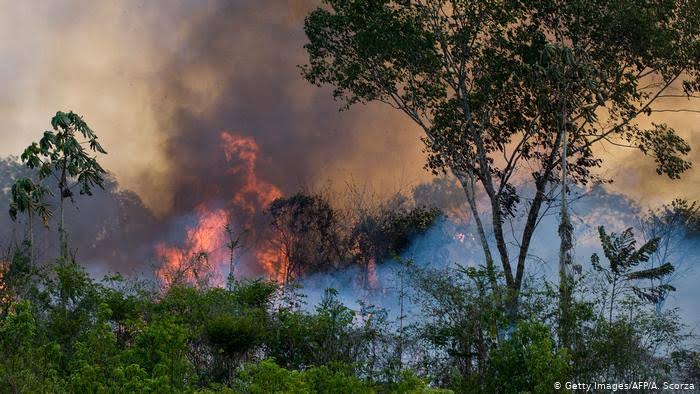
Currently, the Amazon is a carbon sink, meaning it stores carbon dioxide and prevents it from entering the atmosphere and fueling climate change. Deforestation, on the other hand, releases that carbon into the air, making global warming worse. Because of this, deforestation accounts for about 10 to 15 percent of global greenhouse gas emissions. Losing the Amazon means more carbon emissions and a warmer world.
No matter how far from the region you live, the Amazon plays an important role in all of our lives, and we all play a role in protecting the homes of thousands of people and some of the world’s rarest wildlife. (https://www.greenpeace.org/usa/forests/amazon-rainforest/)
In the past three decades, clearing and degradation of the state’s forests have been rapid: 4,200 square kilometers cleared by 1978; 30,000 by 1988; and 53,300 by 1998. By 2003, an estimated 67,764 square kilometers of rainforest—an area larger than the state of West Virginia—had been cleared. Legal and illegal roads penetrate a remote part of the forest, and small farmers migrate to the area. They claim land along the road and clear some of it for crops. Within a few years, heavy rains and erosion deplete the soil, and crop yields fall. Farmers then convert the degraded land to cattle pasture, and clear more forest for crops. Eventually the small land holders, having cleared much of their land, sell it or abandon it to large cattle holders, who consolidate the plots into large areas of pasture. All major tropical forests—including those in the Americas, Africa, Southeast Asia, and Indonesia—are disappearing, mostly to make way for human food production, including livestock and crops. Although tropical deforestation meets some human needs, it also has profound, sometimes devastating, consequences, including social conflict and human rights abuses, extinction of plants and animals, and climate change—challenges that affect the whole world. (https://earthobservatory.nasa.gov/world-of-change/Deforestation ) Today the Amazon rainforest is burning record numbers of fires this year, and now smoke from the expansive flames has been captured on both NASA and NOAA satellites from space. According to the National Institute for Space Research (INPE) satellite data showed an 83 percent increase compared to the same period in 2018. The space agency reports its satellite data has detected more than 72,000 fires since January 2019.
The heavy smoke caused a daytime blackout more than 1,700 miles away in Brazil’s largest city São Paulo on Monday.
Josélia Pegorim, Climatempo meteorologist, told Globo: “The smoke did not come from fires from the state of São Paulo, but from very dense and wide fires that have been going on for several days in Rondônia and Bolivia.
“The cold front changed the direction of the winds and transported this smoke to São Paulo.”
The smoke resulting from some of these wildfires was also captured in satellite images released by NASA. (https://www.express.co.uk/news/world/1168299/amazon-rainforest-fire-how-did-amazon-fires-start-cause-deforestation-how-long-fire/amp )
Deforestation costs $4.5 trillion each year through the loss of biodiversity. For example, half of all pharmaceuticals comes from genetic resources.
Deforestation has eliminated habitat for millions of species. In fact, 80% of Earth’s land animals and plants live in forests.
Long-term, it worsens climate change. The tree canopy keeps the forest soils moist and more resistant to wildfires, droughts, and subsequent floods. The canopy also blocks the sun’s rays during the day and holds in heat at night. Without it, the environment gets hotter during the day.
 KarajaMJ Speaks